Mastering the Goofy Goblin Luminary SVG for Flawless Halloween Paper Crafts
Halloween décor often leans heavily into the macabre, but there is a growing appreciation for designs that balance spookiness with genuine charm. The Goofy Goblin Luminary SVG sits perfectly at this intersection, offering a whimsical 3D paper project that transforms simple cardstock into a glowing centerpiece. For crafters, small business owners, and hobbyists alike, this design provides a unique opportunity to create something memorable without requiring advanced sculpting skills. However, achieving a professional finish requires more than just hitting "cut" on your machine. Understanding the nuances of paper selection, assembly logic, and file compatibility can mean the difference between a wobbly prototype and a polished luminary that illuminates your mantel beautifully.
Understanding the Design and Its Potential
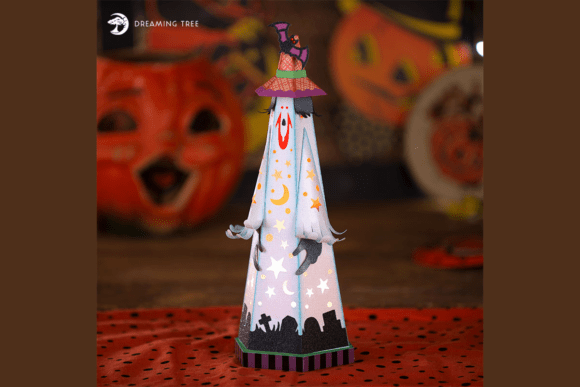
This specific luminary features a playful goblin character designed to cast a friendly, festive glow. Standing approximately 12 inches tall with a 4.5-inch width and depth, it is substantial enough to make a statement on a windowsill or party table yet compact enough for shelf displays. The design relies on layering different textures and colors to create depth, which is why the supply list includes varied materials like Pearl Gemstone paper, glitter cardstock, and vellum. When you approach this project, view it not just as a cut-out shape, but as a structural engineering challenge wrapped in artistic expression. The goal is to create a sturdy vessel that diffuses light evenly while maintaining its geometric integrity.
Common Pitfalls in Material Selection
One of the most frequent mistakes creators make when working with complex SVGs like the Goofy Goblin is underestimating the importance of paper weight and texture. The design calls for specific materials, such as Cricket Cardstock and various patterned papers. Beginners often substitute these with standard printer paper or overly thick cardboard, leading to poor results. Standard printer paper lacks the rigidity needed for a 12-inch structure, causing the luminary to collapse under its own weight. Conversely, heavy cardboard may not fold cleanly along the score lines, resulting in cracked edges and a messy appearance.
Another overlooked detail is the role of translucent materials. The inclusion of Red, Yellow, and Orange Vellum is not arbitrary; these sheets are responsible for the "luminary" effect. If you replace vellum with opaque cardstock, you lose the glowing interior. If you use tissue paper instead, it may tear during assembly or fail to hold its shape against the heat of a light source. Always stick to the recommended material types to ensure the final product functions as intended. For those looking to customize, test your substitutions on a small scale before committing to the full project.
Navigating File Compatibility and Sizing
The Goofy Goblin Luminary SVG is delivered in SVG format, accompanied by a PDF legend. A common misunderstanding among new users is assuming that all SVG files behave identically across different software platforms. While SVG is a universal vector format, how cutting machines interpret layers, cut lines, and score lines can vary. Before loading your file, take time to review the PDF legend. This document helps you identify which color corresponds to which physical piece, preventing the frustration of cutting ten identical shapes when you needed five different ones.
Sizing is another area where errors frequently occur. The design is optimized for 12x12 cutting machines. While you can resize the project, doing so disproportionately can distort the aspect ratio, making the goblin look stretched or squashed. More importantly, resizing affects the structural stability. If you shrink the design too much, the intricate tabs and slots may become too small to handle or glue effectively. If you enlarge it significantly, the paper may not support the increased surface area without additional internal reinforcement. It is advisable to keep the dimensions close to the original 12-inch height unless you have experience modifying structural vectors.
Assembly Challenges and Structural Integrity
Even with perfect cuts, assembly can derail a project if approached haphazardly. The 3D nature of this luminary means that order of operations matters. A frequent error is attempting to glue all sides simultaneously. This often leads to misalignment, where the top and bottom bases do not sit flush, causing the entire structure to lean. Instead, adopt a systematic approach: assemble the main body first, ensuring all vertical seams are secure and square. Allow the adhesive to set partially before attaching the base and top caps.
Adhesive choice is equally critical. Liquid glue can warp thin papers like vellum or patterned stock if applied too generously. Double-sided tape offers precision but may not hold heavier cardstock layers securely over time. A high-quality tacky glue applied sparingly with a fine-tip applicator usually offers the best balance of strength and cleanliness. Pay special attention to the internal supports; these are often small, easy-to-miss pieces that provide the skeleton for the outer skin. Skipping them to save time will result in a fragile final product.
Lighting and Safety Considerations
The purpose of a luminary is to emit light, but the type of light source you choose impacts both safety and aesthetics. Never use traditional incandescent bulbs inside paper crafts, as the heat generated poses a fire hazard and can discolor or scorch the paper. LED tea lights or battery-operated fairy lights are the safest and most effective options. They produce minimal heat and offer consistent illumination. When placing the light source, ensure it is centered to avoid hotspots that might reveal glue marks or uneven paper layers. For a warmer, more inviting glow, opt for amber-toned LEDs rather than cool white.
Maximizing Value for Small Business Owners
For entrepreneurs and small business owners, this design offers a viable product for seasonal sales. However, profitability depends on efficiency. One mistake is treating each luminary as a one-off art piece rather than a producible item. Create an assembly line workflow: cut all pieces for multiple units at once, sort them by color using the PDF legend, and then batch-process the folding and gluing steps. This reduces setup time and mental fatigue. Additionally, consider offering customization options, such as different color schemes for the goblin’s attire, to appeal to a broader customer base without altering the core design files.
Final Checks Before You Cut
Before sending the Goofy Goblin Luminary SVG to your cutter, perform a final review. Check that your blade is sharp; dull blades drag on glitter and gemstone papers, leading to jagged edges. Ensure your mat has sufficient stickiness to hold the lighter vellum sheets in place. Verify that the software has correctly interpreted the score lines versus cut lines. Taking these few minutes to prepare can save hours of troubleshooting later. By respecting the design’s requirements and approaching the build with patience and precision, you will create a Halloween decoration that is not only visually striking but also structurally sound and safe for display.